Sunday, April 6, 2008

Final Report for Topic 1


Q1. Read up a famous biologist and give a write up on this scientist.

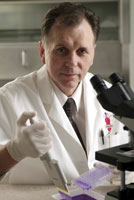
Profile
Name: Barry James Marshall
Date and place born: 30 September 1951 @ Kalgoorlie, Western Australia
Schools he had attended : Newman College , University of Western Australia
Degree he had gotten: Bachelor of Medicine, Bachelor of Surgery
Field:Biology


In 2005, Marshall, together with his long-time collaborator Dr. Warren, was awarded the Nobel Prize in Physiology or Medicine "for his discovery of the bacterium Helicobacter pylori and its role in gastritis and peptic ulcer disease".He was first fascinated by the H.pylori that he decided to experiment it which lead him to the discovery.


Marshall had also received the Warren Alpert Prize (1994), the Australian Medical Association Award (1995), Albert Lasker Award for Clinical Medical Research (1995) ,The John Scott Award, City Of Philadelphia (1995); the Gairdner Foundation International Award (1996), the Paul Ehrlich Prize (1997), the Dr A.H. Heineken Prize for Medicine (1998), the Florey Medal (1998), the Buchanan Medal of the Royal Society (1998), Benjamin Franklin Medal for Life Sciences (1999), Keio Medical Science Prize(2002) and the Australian Centenary Medal (2003).
He was made a Companion of the Order of Australia (2007).

He also have a famous quote , " Everyone was against me, but i knew i am right",which every scientist working in his field knew the quote.He say that when everyone disagree when he stated that Helicobacter pylori was the cause of gastric cancer.

Also,one prominent gastroenterologist once dismissed him as "a crazy guy saying crazy things."But later Barry James Marshall proved him wrong.

Today he is the National Health Medical Research Council (NHMRC) Senior Principal Research Fellow at the University of Western Australia.


Q2.What are the qualities and attitudes that this scientist has that made him a successful biologist?

Barry James Marshall has certain qualities and attitudes that make him a successful biologist, such as creative ,perseverance, ability to work in a team.

Perseverance: He did not give up the thought that H.pylori is the cause of most peptic ulcer and gastric cancer despite the fact that other scientists disagree with him.

Creative
: After he had failed to infect piglets with bacteria, he drank a petri- dish of bacteria and developed gastritis so as to find out if his stomach reveal any bacteria.

Ability to work in a team
: He ,together with his partner Robbin Warner , performed the initial culture of H. pylori and developed their hypothesis related to the bacterial cause of peptic ulcer and gastric cancer and proved that H. pylori is the cause of gastric.

All of this attitudes make him what he is today, a successful biologist!


Q3What discoveries did he make in his field?Elaborate.

He discovered the bacterium Helicobacter pylori and how it causes gastritis and peptic ulcer disease world wide. His discovery illuminated the patterns of helicobacter infection in different populations around the world. In the more developed countries ,which has more pure and clean water, the rate of getting gastritis and peptic ulcer is declining. However, in the less developed countries, the problem still largely persists .Thanks to Marshall’s hard work, Helicobacter pylori is now recognised as a important factor of the stomach cancer. Marshall's hard work, which led to his discoveries freed millions of people worldwide from the suffering of gastritis and peptic ulcer disease!


References:
1)Wikipedia(http://en.wikipedia.org/wiki/Barry_Marshall)

2)Academy of Achievement(http://www.achievement.org/autodoc/page/mar1bio-1)

3)Marshall Auto-biography(http://www.med.monash.edu.au/alumni/docs/prof-barry-marshall.pdf)

4)Academy of Achievement for Q3photo(http://www.achievement.org/achievers/mar1/photos/mar1-002a.gif)

5)Academy of Achievement for Q2picture(http://www.achievement.org/autodoc/photocredit/achievers/mar1-006)

6)Monash University (http://www.med.monash.edu.au/alumni/rod-andrew-oration-2006.html)

7)Monash University for Q1picture(http://www.med.monash.edu.au/assets/images/alumni/barry-marshall.jpg)

8)Youtube for video pertaining on H.pylori
i(http://www.youtube.com/watch?v=I-mWcPDYPVs&NR=1)
ii(http://www.youtube.com/watch?v=NIn3JKe2XM0&feature=related)


Glossary:

1)Helicobacter pylori--- a micro-organism that looked like a corkscrew.(see Barry James Part 2 picture)


2)Gastric Cancer--- a type of cancer that got to do with stomach(also known as stomach cancer)


3)Gastroenterologist--- the study of the structure, functions, and diseases of digestive organs


4)Peptic ulcer---an ersion of the mucous membrane of the lower oesophagus, stomach,or duodenum, caused in partby the corrosive action of the gastric juice.

Saturday, March 1, 2008

Glossary

1.eukaryotes ----A single-celled or multicellular organism whose cells contain a distinct membrane-bound nucleus.

2.molecules----The smallest particle of a substance that retains the chemical and physical properties of the substance and is composed of two or more atoms; a group of like or different atoms held together by chemical forces.

3.binary fission----fission into two organisms approximately equal in size.

4.Mitochondria----an organelle in the cytoplasm of cells that functions in energy production.

Thanks to Dictionary.com (http://dictionary.reference.com/)

Cells Journal 6


Why is eukaryotes cells important to us and how the cells function as a whole?

There is a lot of activities/functions within a cell.For instance, nucleus is 'responsible' for passing down DNA during cell division( binary fission).Mitochondria: Release energy during respiration. There is many more functions of a eukaryotes cells.


They are important to us ( and also other organisms like plant and animals,fungi) because they allow us to grow when cell divisions occurs.They repair damage cells and replace dead cells in our bodies.They release energy for the cells when we were doing something or even sleep. There will be also a higher form of life if the cells in our body divides.

As for plants,it includes the same as us but there is more. The plants photosythesis with the help of the chloroplasts in the cells and to keep a regular shape by the cell walls of the cells.

P.S The oldest eukaryotic fossil is approximately 1.5 billion years old and the eukaryotes cellscomes from the period :Proterozoic.


Special acknowledgement to :
1)World Builders (http://curriculum.calstatela.edu/courses/builders/lessons/less/les4/euk-and_pro.html)

2)The Kingdom of life ( http://www.earthlife.net/kingdom.html)

3)Unknown (http://www.gwu.edu/~darwin/BiSc151/Eukaryotes/Eukaryotes.html)

4)Tolweb (http://tolweb.org/tree?group=Eukaryotes&contgroup=Life)

5)Wikipedia(http://en.wikipedia.org/wiki/Eukaryote)

Sunday, February 24, 2008

Cells Journal 4 and 5


There are many types of eukaryotes cells, with the animal and plant cells to be the most familiar cells.


Animal Cells:
1)Nucleus consists of nucleus pore ,nucleus envelope,chromatin and nucleolus.Function of nucleus:Store and contain genetic information(DNA) of the cell that passes down from one generation to another. Exception: the red blood cell has no nucleus and does not live very long.

2)Plasma membrane. Function: It encloses the cells, allowing only water and nutrients to be admitted into the cells and wastes are expelled out of the cells through the membrane.

3)Cytoplasm. Function: It allows molecules to move around within the cell, full of chemicals like: dissolved oxygen and/or carbon dioxide, amino acids, simple sugars and many more.

4)Ribosomes.(Found in cytoplasm) Function: It does protein synthesis.

5)Mitochondria: They release energy using oxygen during respiration.


Plant Cells:
1)Nucleus consists of nucleus pore ,nucleus envelope,chromatin and nucleolus.Function of nucleus:Store and contain genetic information(DNA) of the cell that passes down from one generation to another. Exception: the red blood cell has no nucleus and does not live very long.

2)Plasma membrane. Function: It encloses the cells, allowing only water and nutrients to be admitted into the cells and wastes are expelled out of the cells through the membrane.

3)Cytoplasm. Function: It allows molecules to move around within the cell, full of chemicals like: dissolved oxygen and/or carbon dioxide, amino acids, simple sugars and many more.

4)Ribosomes. Function: It does protein synthesis.

5)Vacuole: It may hold water, food, or wastes -- whatever the cell is storing or transporting.

6) Mitochondria: They release energy using oxygen during respiration.

7)Chloroplasts: They do photosynthesis using carbon dioxide ,water and sunlight.

Look for the 2 videos below for more graphics pictures and more details of the cells not listed above.


Special acknowledgement to
1)Wikipedia for photos of cells and information (http://en.wikipedia.org/wiki/Eukaryotes)

2)The Kingdom of Life (http://www.earthlife.net/kingdom.html)

3)Youtube for videos(http://www.youtube.com/watch?v=wOe-uLJg6Og&eurl=http://biologyjournnal.blogspot.com/)
(http://www.youtube.com/watch?v=Zi-DdHkMCP8&eurl=http://biologyjournnal.blogspot.com/)

4)World Builders (http://curriculum.calstatela.edu/courses/builders/lessons/less/les4/euk-and_pro.html)

Sunday, February 10, 2008

Glossary

1)Helicobacter pylori :a micro-organism that looked like a corkscrew.(see Barry James Part2 picture)

2)Gastric cancer:a type of cancer that got to do with stomach(also known as stomach cancer)

3)gastroenterologist :the study of the structure, functions, and diseases of digestive organs.

4)peptic ulcer: an erosion of the mucous membrane of the lower esophagus, stomach, or duodenum, caused in part by the corrosive action of the gastric juice.


Special acknowledgement to:1)Dictionary.com
for providing the meaning of peptic cancer and gastroenterologist(http://dictionary.reference.com/)

Barry James Marshall( Part 3)


He discovered the bacterium Helicobacter pylori and how it causes gastritis and peptic ulcer disease world wide. His discovery illuminated the patterns of helicobacter infection in different populations around the world. In the more developed countries ,which has more pure and clean water, the rate of getting gastritis and peptic ulcer is declining. However, in the less developed countries, the problem still largely persists .Thanks to Marshall’s hard work, Helicobacter pylori is now recognised as a important factor of the stomach cancer. His discoveries freed millions of people worldwide from the suffering of gastritis and peptic ulcer disease!


Special acknowledgement to1)Wikipedia(http://en.wikipedia.org/wiki/Barry_Marshall)
2)Academy of Achievement(http://www.achievement.org/autodoc/page/mar1bio-1)
3)Academy of achievement(http://www.achievement.org/achievers/mar1/photos/mar1-002a.gif)

Barry James Marshall( Part 2)


Barry James Marshall has certain qualities and attitudes that make him a successful biologist, such as creative ,perseverance, ability to work in a team.

Perseverance: He did not give up the thought that H.pylori is the cause of most peptic ulcer and gastric cancer despite the fact that other scientists disagree with him.
Creative: After he had failed to infect piglets with bacteria, he drank a petri- dish of bacteria and developed gastritis so as to find out if his stomach reveal any bacteria.

Ability to work in a team: He ,together with his partner Robbin Warner , performed the initial culture of H. pylori and developed their hypothesis related to the bacterial cause of peptic ulcer and gastric cancer and proved that H. pylori is the cause of gastric.

All of this attitudes make him what he is today, a successful biologist!


Special acknowledgement to:1)Wikipedia (http://en.wikipedia.org/wiki/Barry_Marshall)
2)Academy of Achievement (http://www.achievement.org/autodoc/page/mar1bio-1)
3)Academy of Achievement for picture ( http://www.achievement.org/autodoc/photocredit/achievers/mar1-006)